Remote Control Mower Technology Changes Lawn Maintenance
Traditional mowing often requires operators to walk behind or ride directly on machinery for long periods. On steep slopes, roadside verges and dense vegetation, that approach increases fatigue and exposure to hazards.
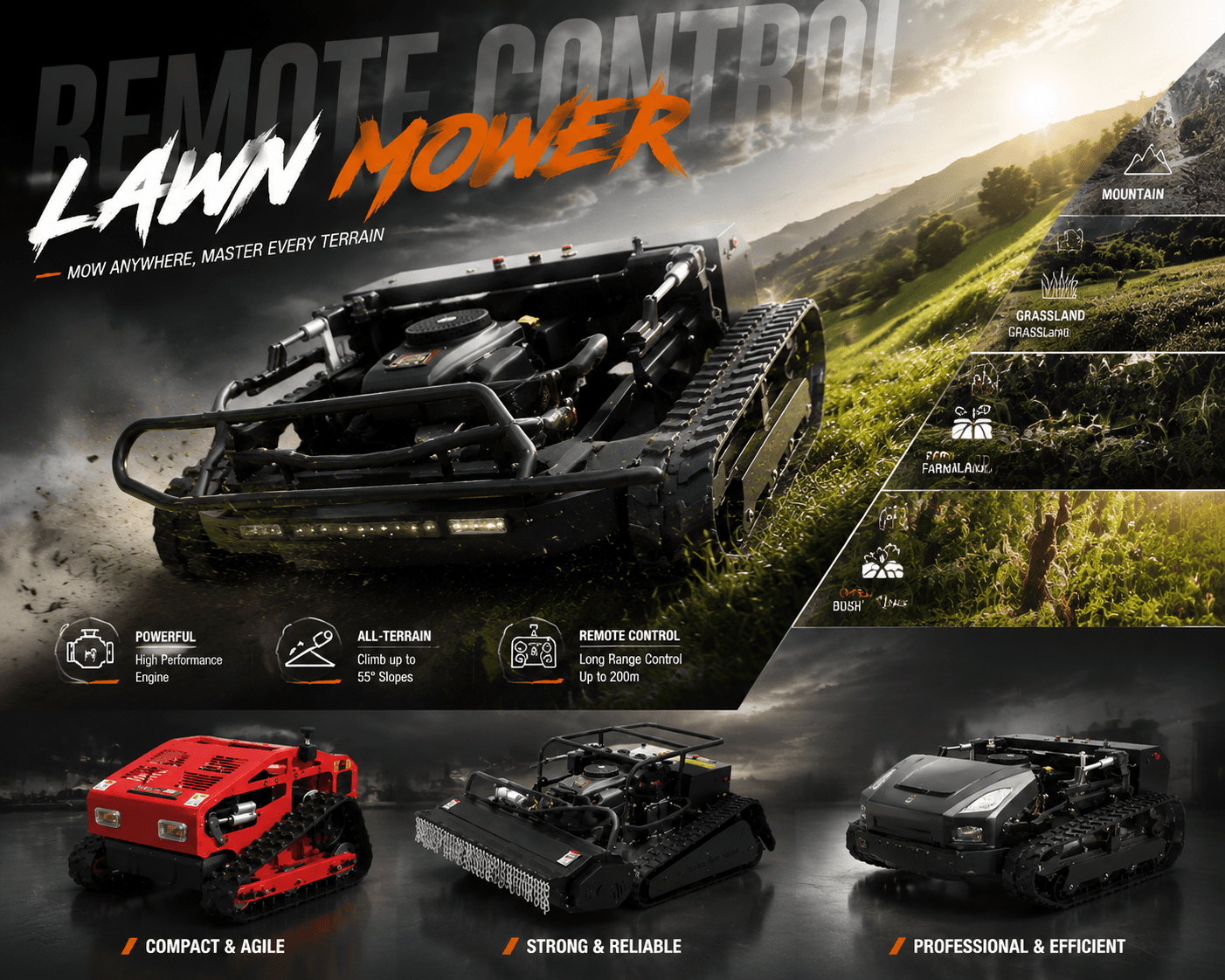
A remote control mower lets the operator stand at a practical distance while maintaining a clear view of the machine and work area. The result is not simply fewer footsteps: it is a different way to organize labor, safety and productivity.
1. Separating the Operator from the Machine
Remote operation reduces direct exposure to vibration, flying debris, rollover risk and unstable ground. One trained operator can control the mowing path without sitting on the machine.
2. More Consistent Work on Difficult Terrain
Tracked platforms provide traction and a low center of gravity for slopes and uneven surfaces. Consistent travel speed and cutting overlap help reduce repeated passes.
3. Better Use of Skilled Labor
Teams can assign fewer people to manual brush cutting and use them for inspection, boundary clearing and project coordination. The machine handles the repetitive heavy cutting while people focus on decisions.
4. Matching the Machine to the Application
Labor savings depend on selecting the correct cutting width, power, track system and attachment. Terrain gradient, vegetation density, access width and expected operating hours should be reviewed before purchase.
A useful quotation starts with the job—not a generic price list.
Conclusion
For contractors, municipalities, orchards and solar farms, a properly matched remote control mower can reduce operator fatigue, improve safety and make output more predictable.